
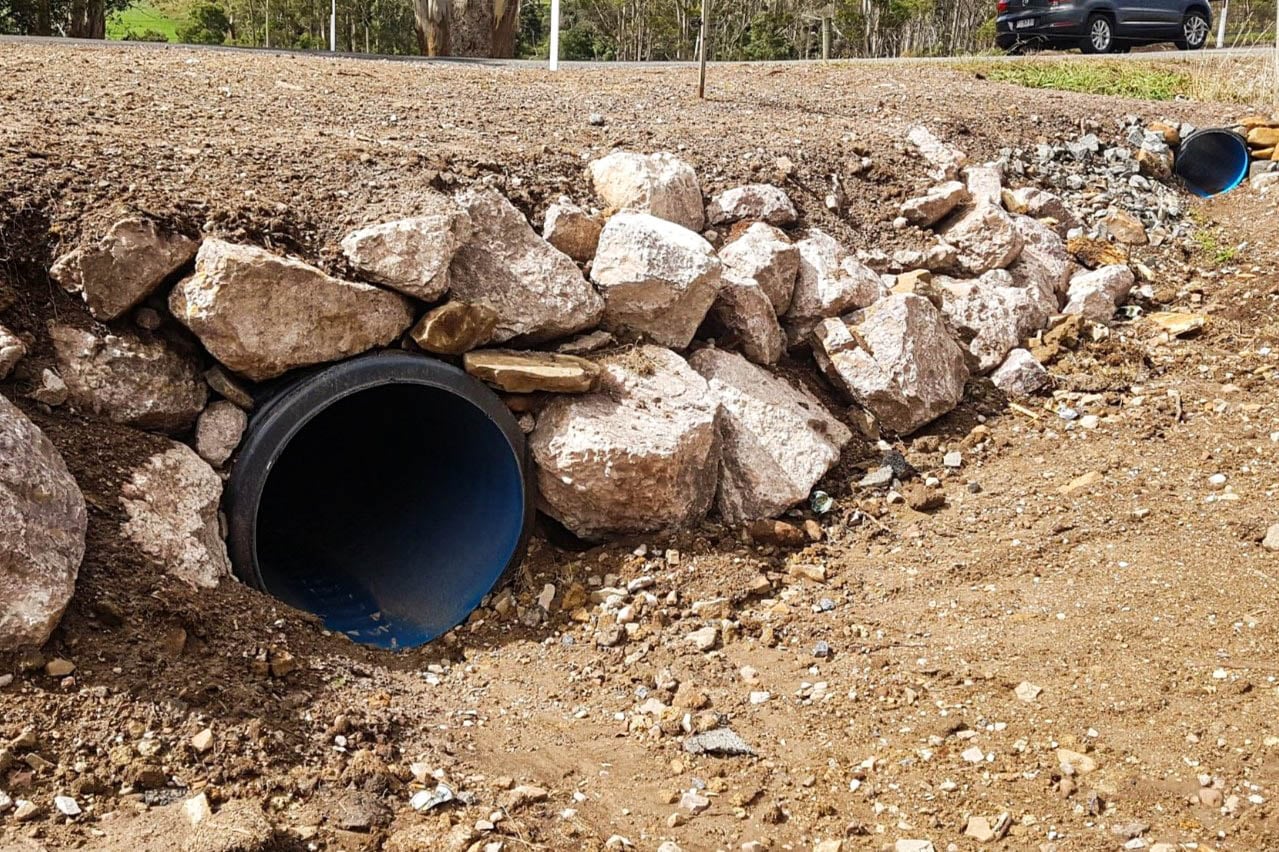
First off, the chance of a fire burning out a pipe is incredibly minimal in comparison to a steel pipe rusting and collapsing (10-20 years approx.) or a concrete pipe fracturing/cracking and joint failure (50-70 years approx.). However, below is a very helpful guide on minimising the risk of a fire burning out a pipe.
Fire safety is a crucial consideration in the design and maintenance of piping systems, particularly in regions prone to bushfires. While pipes themselves are generally fire-resistant, debris accumulation and improper installation can increase the risk of fire-related damage. By implementing best practices for pipe installation and maintenance, you can effectively reduce fire hazards and enhance the longevity of your infrastructure.
One of the key ways to reduce fire risk in your pipes, is by keeping debris at a minimum. Organic material such as leaves, twigs, and grass can easily ignite during a fire, leading to the potential spread of flames through and around the pipe structures.
To minimise this risk:
A well-designed drop-off at the discharge end of a pipe system can significantly reduce debris buildup. By creating a clear flow path for water and minimizing areas where organic material can settle, you can reduce the likelihood of debris igniting and affecting the pipe’s structural integrity.
Proper installation in accordance with Australian standards ensures that piping systems are designed to withstand extreme conditions, including fire events. Adhering to these standards enhances the fire resistance of the system and provides an extra layer of safety. Ensure that:
A small depression at the entry and exit of a pipe, supported by the use of rock, helps to reduce the accumulation of debris. This simple design consideration ensures that organic material is naturally filtered away from the pipe system, decreasing fire risk.
While fires in certain areas may be infrequent, the potential for significant impact remains. It is essential to prepare for worst-case scenarios by designing and maintaining piping systems with fire resistance in mind. Periodic assessments and proactive maintenance help ensure that the system remains in optimal condition even if a fire occurs years apart.
Even under severe fire conditions, the structural integrity of properly installed pipes is typically maintained. The surrounding earth acts as a natural insulator, effectively ‘baking’ around the pipe, which helps to protect it from direct damage. This reinforces the importance of correct installation and adherence to best practices.

Corrutech is Tefco Piping Systems’ range of twin wall corrugated stormwater pipes, manufactured from high-density polyethylene (HDPE) for strength, durability, and long-term reliability. Designed to perform in harsh conditions, Corrutech is widely used for stormwater drainage, road crossings, culverts and bridge replacements.
Learn more